How Long Do Solar Camera Batteries Last? What You Need to Know
We all know that solar-powered surveillance cameras are reliable safety companions. They are “set it and forget it” devices. But many of us still wonder: How long do solar camera batteries actually last?. The answer is that it is not a fixed number of days or months. The battery life of these cameras depends upon several factors, such as
- How the camera is used
- Where it is installed
- How much sunlightdoes it receives
In this blog, we will break down how long the batteries last and how you can make them last longer.
How Solar Camera Batteries Work?
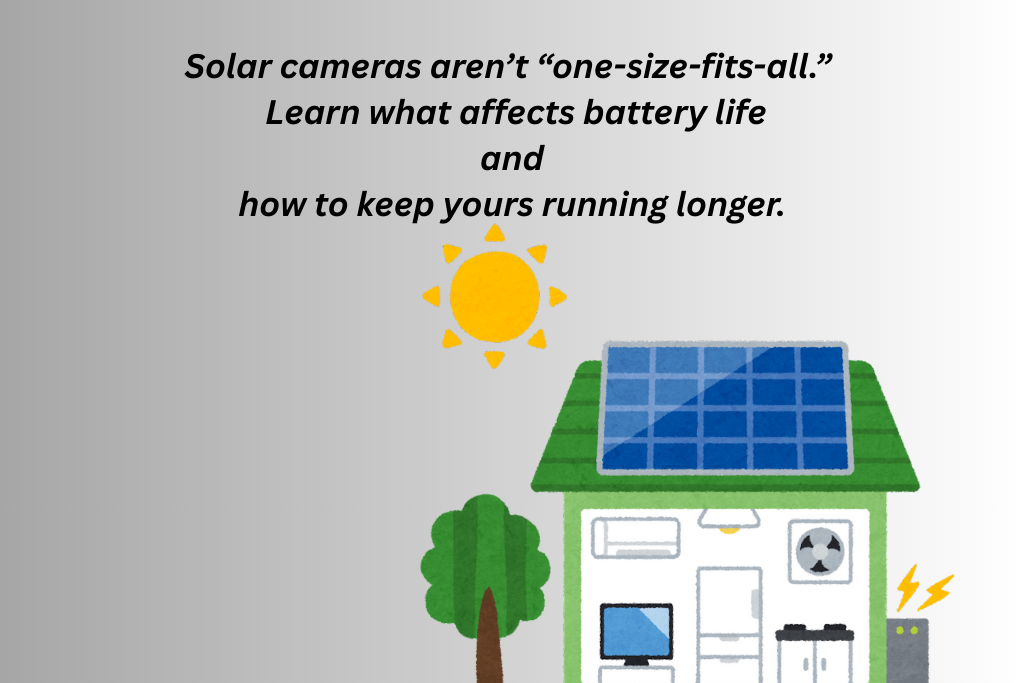
Solar security cameras use a rechargeable internal battery. It means that they don’t run directly on sunlight alone and store energy collected by a solar panel. Here’s the basic process:
- During daylight, the solar panel converts sunlight into energy
- That energy charges the internal battery
- The camera runs on battery power day and night
- The cycle repeats daily
This setup allows the camera to operate even at night or during cloudy weather, as long as the battery has stored enough charge.
Average Battery Life of Solar Cameras
Solar security cameras are designed as low-power cameras, and they have two main categories.
- Battery cameras
- Outdoor solar cameras
Here’s how their usage time is calculated. These cameras are divided into three categories of power consumption.
Static power consumption
It refers to the amount of power the camera uses when not actively streaming video. Although the camera appears idle, it still needs energy to remain ready and connected. This power usage includes:
- PIR sensor power consumption when it stays active. It can wake the camera when movement is sensed.
- Wi-Fi keeps power consumption. The camera periodically communicates with the Wi-Fi router to maintain a network connection. It uses energy even when no video is being transmitted.
- Then comes the sleep consumption of other components.
- The second type is the fill light power consumption. It refers to the power used by the camera’s illumination systems during nighttime operation. The fill light is used to improve image quality in low-light conditions. It is divided into infrared light and white light. These two types of fill lights have significantly different power consumption levels. It’s because white light generally consumes much more power than infrared light.
- The third type is working power consumption. It is the power the camera consumes during normal video streaming.
These low-power cameras spend most of their time in a standby state. They become active when the PIR sensor is triggered, so their static time can be calculated as:
Static time= total power-on time – working time
This static time is usually considered equal to the total power-on time. Since the camera does not turn on the fill light during the day, it takes up the power consumption of the camera. At night, it takes into account the camera’s power consumption as well as the fill light’s.
Daily Operation
On a full charge, most solar camera batteries can power the camera for 2 to 7 days. They can do it without sunlight, but it depends on the usage. With regular sunlight, the battery may stay charged indefinitely.
Battery Lifespan (Long-Term)
In terms of long-term durability:
- Most solar camera batteries last 2 to 5 years
- After that, capacity slowly declines
- Some models allow battery replacement; others do not
Key Factors That Affect Solar Camera Battery Life
1. Sunlight Exposure
Sunlight is the most important factor.
- Direct sunlight charges batteries faster
- Shaded areas reduce charging efficiency
- Short winter days may limit charging time
A camera mounted under facing away from the sun may struggle to stay charged.
2. Motion Detection Activity
Every time the camera records, it uses power.
- High-traffic areas drain batteries faster
- Frequent alerts and recordings reduce battery reserve
- Wind-blown trees or pets can trigger unnecessary recordings
More motion = more battery usage.
3. Video Quality and Recording Length
Higher settings consume more energy.
- HD or 2K video uses more battery than standard resolution
- Longer clips drain power faster
- Continuous recording is not ideal for solar cameras
Solar cameras work best with short, motion-based recordings.
4. Weather Conditions
Extreme temperatures affect battery efficiency.
- Cold weather reduces battery capacity
- Excessive heat can shorten battery lifespan
- Snow or dust on the panels blocks sunlight
Seasonal changes can cause noticeable differences in performance.
5. Camera Settings and Features
Extra features draw extra power:
- Night vision
- Two-way audio
- Spotlight or siren functions
- Frequent app check-ins
The more features are active, the faster the battery drains.
Do Solar Cameras Work at Night or on Cloudy Days?
Yes, but with limitations. At night, the camera relies on the stored battery charge. On cloudy or rainy days, the solar panel may still charge but with much slower rate. If there are several cloudy days in a row, then the battery level may drop. This is why proper placement and energy-efficient settings are crucial.
Signs Your Solar Camera Battery Is Struggling
You may notice:
- Frequent low-battery alerts
- Missed recordings
- Camera going offline overnight
- Longer charging times than usual
How to Extend the Life of Your Solar Camera Battery
Here are practical steps to maximize battery performance:
Optimize Placement
- Mount the solar panel where it gets the most direct sunlight
- Avoid shadows from trees, walls, or roof overhangs
- Clean dust or debris off the panel regularly
Adjust Motion Sensitivity
- Lower sensitivity to reduce false alerts
- Use activity zones to focus only on important areas
Reduce Recording Load
- Shorten the video clip length
- Lower video resolution if possible
- Disable unnecessary features like constant live view
Prepare for Seasonal Changes
- Expect lower performance in winter
- Adjust settings during low-sun months
- Consider occasional manual charging if supported
Are Solar Camera Batteries Replaceable?
This depends on the model:
- Some cameras have removable batteries
- Others use sealed internal batteries
- Budget models often don’t allow replacement
Conclusion
How long solar camera batteries remain effective depends on multiple factors. It’s not about how long a single charge lasts. If your solar camera’s battery is failing, the panels may need better sunlight or adjusted settings. That’s why, if you are planning long-term use, then before buying, check whether battery replacement is possible or not.


You May Also Like
Can Solar Security Cameras Work at Night? Debunking Common Myths
How Solar-Powered Security Cameras Work: A Beginner’s Guide