Best Motion Sensors for Renters in 2026
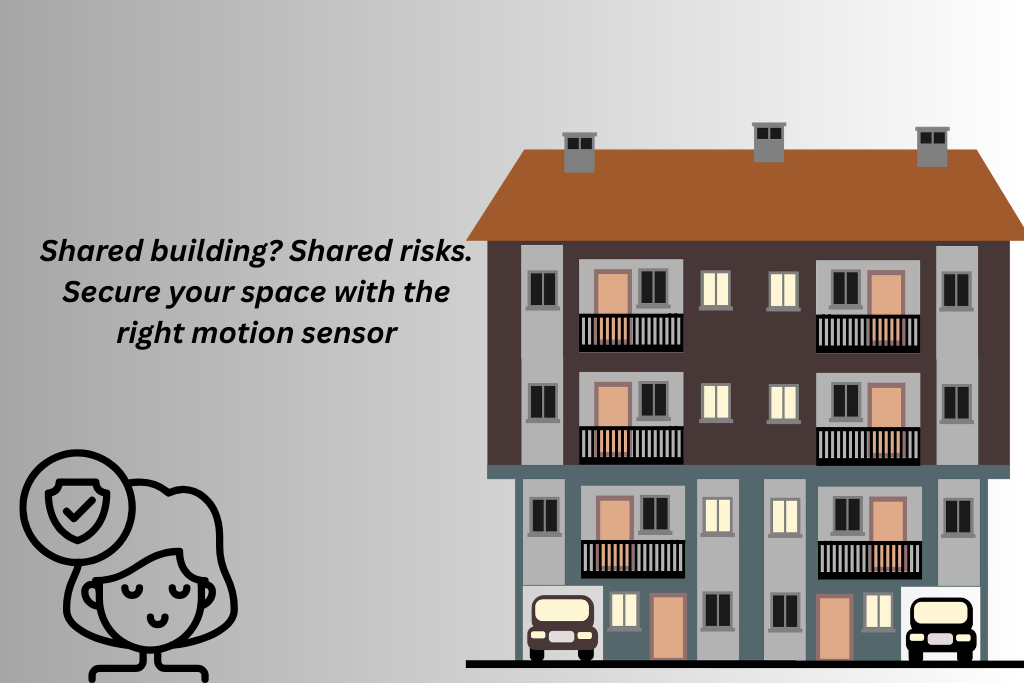
When living in an apartment, the security is more about shared responsibility. Even if your door is secure, the vulnerable common areas can still put you at risk. If any of the access points are unsecured, the entire building becomes vulnerable. It’s because, even if you lock your door, an intruder can still enter the common areas. These areas include shared entry points such as
- Main building entrances
- Shared hallways and staircases
- Elevators
- Parking garages
Since in such a scenario, renters cannot install sensors or other security measures in the entire building, they feel the risk. Renters have limited options because,
Limited Control Over Security Upgrades
Unlike homeowners, renters living in apartments cannot install permanent alarm systems. They are usually not allowed to drill doors or walls. This limits the ability to customize security solutions.
Apartments Have High Resident Turnover
Apartments have frequent move-ins and move-outs. This creates risks such as:
- Old tenants keeping spare keys
- Delays in rekeying locks
- Strangers frequently enter the building
Face Frequent Package Theft Issues
With online shopping growing through platforms like Amazon, package theft has become a major issue in apartment buildings. Common problems for renters are
- Packages left unattended in lobbies
- No secure parcel lockers
- Easy access for non-residents
Weak Door and Window Security
Since renters usually can’t replace doors, they must rely on portable security devices. It is because some apartments have:
- Old or hollow-core doors
- Basic locks
- Ground-floor windows without reinforcement
Neighbor-Related Risks
Security in apartments depends heavily on neighbors, and one careless action can compromise the entire building. Such as:
- Someone is letting strangers in
- Poor awareness of suspicious activity
- Shared responsibility for safety
Poor Lighting in Common Areas
Dim hallways, stairwells, and entrances create hiding spots. Criminals prefer low-visibility areas, especially at night.
Lack of Surveillance
Without surveillance, crime prevention becomes reactive instead of preventive. Many older apartment buildings:
- Don’t have CCTV
- Have broken cameras
- Don’t actively monitor footage
Over-Reliance on Landlords
Tenants often assume building management handles everything. However:
- Security budgets may be limited
- Maintenance delays happen
- Upgrades are not prioritized
That’s why, if you live in a shared building, you must enhance your security. Motion sensors are your smart way to do that.
4 Best Motion Sensors for Renters
Aqara Motion Sensor P1
The Aqara Motion Sensor P1 is the most advanced version of Aqara’s sensors. This device is one of the best motion sensors that uses PIR technology. It offers smart home integration with several other enhancements. Aqara P1 offers upto five years of battery life under certain conditions, such as low temperature or very short detection timeouts. This five-year battery performance can be achieved when the LED indicator is turned off, and the detection timeout is set to no less than 30 seconds.
The sensor allows you to adjust the sensitivity level to the distance from which motion will trigger the device. This helps in reducing false alarms and allows for more precise installation. You can configure the detection timeout between 1 and 200 seconds and confirm it by pressing the device button. Its installation does not require tools. This device can also automate lighting.
Key Features
- The sensors provide a wide 170° viewing angle at distances up to 2 meters. It also offers a 150° viewing angle at distances up to 7 meters.
- It also includes a versatile 360-degree adjustable stand.
- The device uses the Zigbee 3.0 protocol.
- It supports OTA Updates for future feature additions and fixes
- An Aqara Zigbee 3.0 hub is required for operation
- It is compatible with multiple ecosystems, including Apple HomeKit, Amazon Alexa, and IFTTT.
Ring Motion Detector (2nd Gen)
The Ring Alarm Motion Detector (2nd Gen) requires a Ring Alarm Base Station to operate. It detects movement inside the home and sends instant mobile alerts. This device has a compact design and offers tool-free installation. You can install it anywhere, depending on the area you want to cover. The motion detector offers a range of up to 76 meters. It operates using two AA batteries.
Smart motion settings ignore pets. The pet detection is supported from a height of 2.1 meters for pets weighing under 22 kg.
Key Features
- Mounting Options include room corners or flat walls
- Z-Wave Connectivity offers up to 76m range
- Powered by 2 × AA Batteries
- Adjustable Motion Sensitivity]
- Pet Detection Support
- Compatible with 1st and 2nd Gen Ring Alarm devices
Sengled Smart Motion Sensor
Sengled Smart Motion Sensors allow users to automate their smart LED bulbs. The device uses trigger-based actions through the Sengled Home app. You can deselect specific groups or bulbs if you do not want them to be included. You can also individually set each bulb’s response.
Key Features
- Automation through Sengled Home App
- Compatible with Sengled Smart Sensors and Motion-Enabled Bulbs
- Open and Close Trigger Configuration
- Slider-Based Activation for each trigger
- Customizable room-based automation
- Ecolink Z-Wave Plus motion detector
The Ecolink Z-Wave Plus PIR Motion Detector
The Ecolink Z-Wave Plus motion detector adds an additional layer of home security. It detects movement by using passive infrared technology. This is a Z-Wave Plus sensor which is built on the Gen5 (500 Series). That’s why, it improves wireless range and allows faster operation. The sensor offers a maximum detection range of up to 30 feet deep by 50 feet wide. One of its primary features is pet immunity. It allows the device to be configured to reduce sensitivity toward small and medium-sized pets weighing up to 55 pounds. This helps prevent false alerts caused by cats or dogs moving freely inside the home.
Key Features
- Z-Wave Plus Gen5 / 500 Series Certified
- Passive Infrared (PIR) Motion Detection
- Maximum Coverage of 30 ft. depth and 50 ft. width
- Pet Immunity of up to 55 lb.
- Battery-Powered
- Tamper Detection
- Indoor Use Only
Conclusion
Living in an apartment comes with risks, and staying safe often falls on renters themselves. Motion sensors have proven to be one of the most practical solutions for renters. However, the choice of right motion sensor depends on your apartment layout and security risks.


You May Also Like
Best Window Alarm for Renters

Top 9 Loudest Personal Safety Alarms of 2025