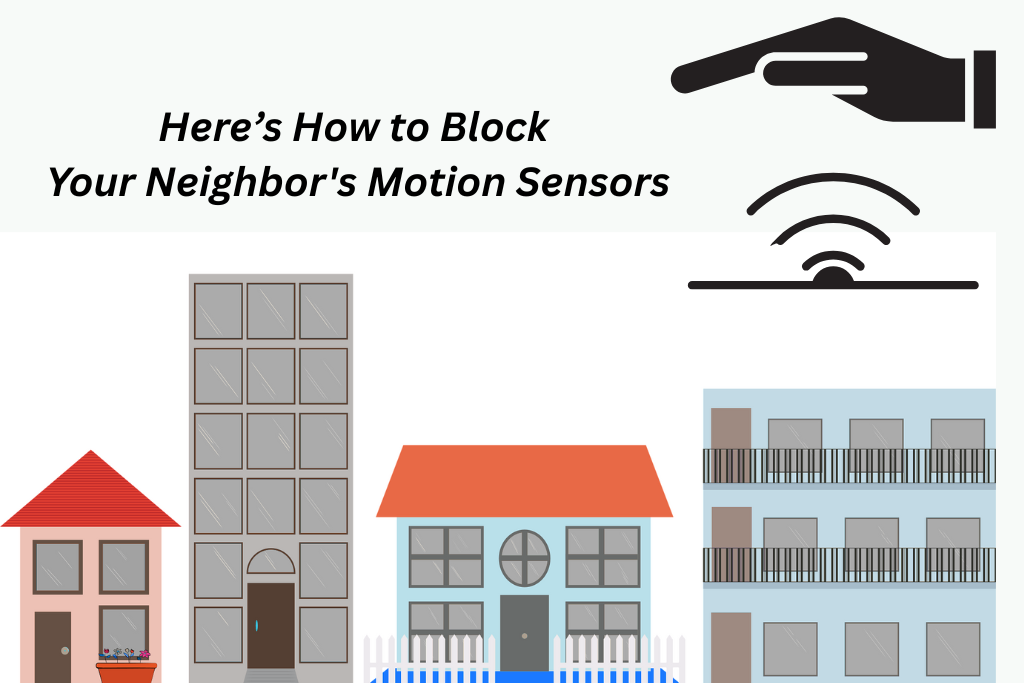
How Do I Block My Neighbor’s Motion Sensor?
Living in rentals means you have shared spaces and close neighbors. Shared rentals give you very little control over what others install outside their homes. Your neighbor’s motion sensor light or security camera keeps triggering every time you step out and it can feel invasive. Even when you walk past your window, their motion sensors trigger, leaving you frustrated.
Well, the good news is that there is a safe and legal solution. You have a non-destructive way to block your neighbor’s motion sensors without even touching their device or violating your lease.
This guide shares what you can and cannot do to block a neighbor’s motion sensors from affecting your daily life.
First, What Kind of Motion Sensor Are We Talking About?
Most residential motion sensors fall into these categories:
- PIR sensors that detect body heat and movement
- Motion-activated lights that turn on when motion is detected
- Security cameras with motion detection that record and send alerts
These sensors are usually triggered by:
- Body heat
- Sudden movement
- Reflections
- Shadows
- Wind-blown objects
Understanding this helps you block the trigger and not the device itself.
What You Should NOT Do as a Renter
Before we get into solutions, let’s be clear about what to avoid:
- Do not cover or tamper with your neighbor’s device
- Do not spray, paint, or physically block their sensor
- Do not use signal jammers or electronic interference. It is illegal in many places.
- Do not install permanent fixtures that violate your lease
Renter-Friendly Ways to Block Motion Sensor Triggers
Here are the safe and renter-friendly ways that you can go for:
1. Use Visual Barriers Inside Your Rental
If your windows face a neighbor’s camera or sensor and the sensor is being triggered by movement inside your apartment, then try these fixes:
- Use blackout curtains or thermal curtains
- Use frosted window films. These are peel-and-stick, which makes them renter-safe.
- Apply privacy window clings. These block heat signatures, shadows, and motion visibility are without permanent changes.
2. Redirect Your Movement, Not the Sensor
Although this solution is not ideal, it’s a temporary, zero-conflict solution. If the sensor activates when you use a shared space (hallway, balcony, parking area):
- Walk closer to the walls instead of the open areas
- Avoid walking directly toward the sensor’s line of sight
- Use alternative paths when possible
3. Use Outdoor Privacy Screens (No Drilling)
For renters with patios, balconies, or small yards, these reduce motion visibility without attaching anything to walls or fences. They also improve privacy and aesthetics.
- Freestanding privacy screens
- Artificial hedge panels
- Portable room dividers (outdoor-rated
4. Control Reflective Surfaces
Motion sensors can be triggered by light reflection and sudden brightness changes. Repositioning these can significantly reduce false triggers. Check for:
- Mirrors near windows
- Shiny furniture facing outdoors
- Glass tables or metallic decor
5. Talk to Your Neighbor (Yes, Really)
Many people don’t realize their setup is affecting others. That’s why, when discussing this problem with your neighbors, keep it about false alerts and unnecessary triggers, not accusations or privacy invasion. This is often the most effective and least stressful option.
You can politely ask if they can:
- Reduce the motion sensitivity
- Adjust the detection zone
- Tilt the camera or sensor slightly
When Your Neighbor’s Motion Sensors Become a Privacy Issue
If your neighbor’s camera or sensor:
- Faces directly into your window
- Records private living areas
- Monitors spaces not owned by them
You may have grounds to:
- Speak to your landlord or property manager
- Request repositioning due to tenant privacy rights
- Ask for mediation (especially in apartment complexes)
As a renter, your right to reasonable privacy still matters.
Can You Block a Motion Sensor Digitally?
The short answer is no, at least not legally or safely. You cannot do anything involving:
- Signal blocking
- Wi-Fi interference
- Infrared disruption
Is either ineffective, illegal, or risky, especially in rental properties. Tha’s why you need to stick to physical, reversible, and non-invasive solutions.
Conclusion
Avoid directly blocking your neighbor’s motion sensors. It will lead to damage or confrontation. As a renter, your best strategy is to lock visibility by using removable privacy solutions. Also, communicate this issue with your neighbors and try finding solutions. This will help to avoid lease violations and is still a renter-friendly approach.

You May Also Like
Smart Motion Sensor for Renters with Alexa
Is a Window Alarm System Really Worth It For Renters?